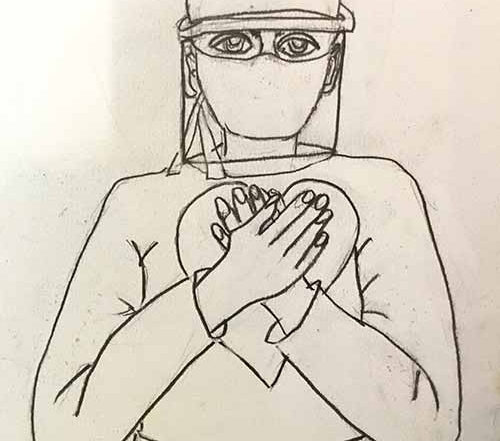
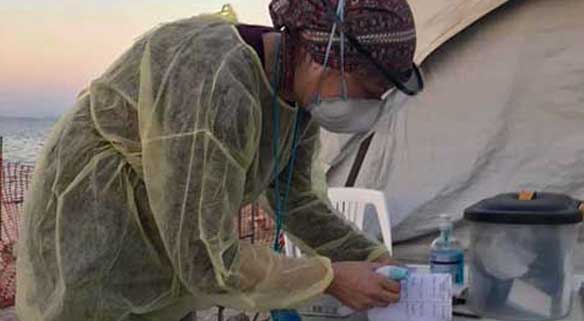
Tuesday triage, a cold evening by the sea. Emotionally challenging due to 2 patients. One a young man, disheveled, clearly suffering. He had deep wounds from cutting, huge bandages on one arm, and new cuts [...]
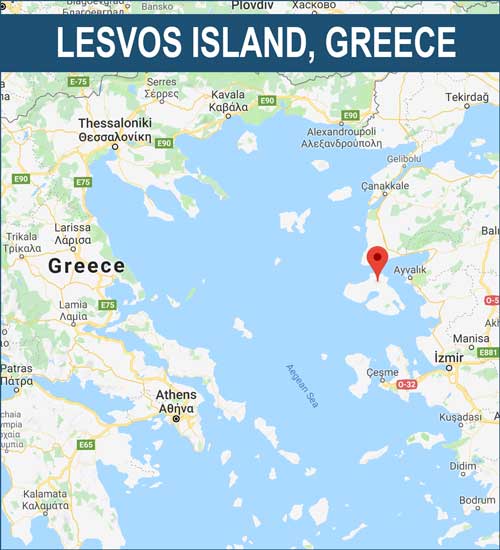
In February 2018, the Hands on Global team first went to Lesvos, Greece. We provided medical care via a mobile clinic at the Moria Refugee Camp. Our team returned to the Lesvos Camps, (MORIA AND KARA TEPE 2) 6 times to provide primary medical care in collaboration with other medical NGOs.
ON THE GROUND WITH HANDS ON GLOBAL
Hands On Global had boots on the ground for 7 months in 2021
Moria / Kara Tepe 2 Camps. We began work there in 2018. We provided medical care via a mobile clinic at the Moria Refugee Camp. Our team has returned to Greece 7 times to provide service in these camps. Moria Camp was a disaster. It was said to be the “worst” refugee camp. It was built to house 2,000 people as a military prison. In 2020 it housed over 25,000 refugees. There were two overflow camps, the Olive Grove and the Jungle housing refugees in shabby tents and plastic makeshift shelters.
In September 2020 the Moria camp burnt to the ground causing 25,000 refugees to be homeless. It was a nightmare to all; the refugees, the NGO’s, the Greek Government. Refugees were stuck living on the road with no shelter and minimal food and water. This, during the Covid pandemic.
In October 2020, the new camp, Kara Tepe 2, was opened on an old military firing range next to the Aegean Sea. Our team arrived Nov 5, 2020.Refugees were forced to move into this camp and into summer tents. First rain, the camp flooded. NGOs scrambled to dig ditches and provide wooden pallets to elevate the tents. Cold wind and rain blow through these tents constantly. Initially there was a shortage of sanitary facilities, refugees had to bathe in the sea.
Basic necessities had been lost in the fire and needed to be replaced. Warm clothing, coats and shoes were desperately needed for the coming winter. The camp food is the same MRE’s – unpalatable and culturally inappropriate for most refugees. Those who can, cook meager meal, buying food with the 70 euros a month they get from the UNHCR. The camp is “closed” and refugees are only permitted outside the camp once a week for 4 hours on a rotating basis, 100 at a time. There is a heavy police presence in the camp making it feel very oppressive.
A newly formed NGO, Crisis Management Association (CMA) was formed to foster collaborative care by the medical NGOs. There is now a primary care clinic, chronic care clinic, psychiatric care (limited), wound clinic, gyn and pediatrics. Many suffer with chronic illness, infected bone injuries, unhealed wounds from war and torture, disease from poor sanitation and almost all suffering from PTSD. Scabies is rampant. Everything is rationed including medical care. People have to line up very early in the morning to get a number to be seen by a medical provider. Lab work, X-rays and hospital visits are closely rationed. The hospital on the island is a small community hospital, not prepared for thousands more patients. Referrals for specialty care in Athens are reserved for the VERY SICK and it is difficult to have a refugees geographic restriction lifted for medical care. Asylum status trumps medical needs in almost all cases. Medications and supplies are mostly donated by the NGO’s and therefore limited in quantity. Medications are a huge need.
Although this camp is called a “reception camp”, many refugees are stuck there for years awaiting the interviews for their asylum cases. Most will not get asylum and will have spent years in exile trying to start a new SAFE life. Currently there are mostly asylum rejections. For many, deportation is a death sentence. There are few options for those with rejections.
We worked hand to hand and heart to heart and stayed focused on the tasks. We stayed present. The one-on-one connection we are able to make with refugees can bring hope to a refugee for one more day.
UPDATE
In October 2021several of our team retuned to Greece to meet with other NGO’s and discuss the changing situation. There is a huge homeless refugee population in Athens.The camp was being depopulated with many refugees given asylum rejections and some temporary asylum in Greece. They get a ferry ticket to Athens and that is it. If given temporary asylum they can remain in Greece but there are no funds given to live, no food, no housing and no medical care. If they were rejected they have 30 days to leave Greece or risk detention and deportation. Nobody wants them. Where do they go? They are forced to cross borders illegally, seeking a country that will allow them to stay. They are brutally treated when caught.Our colleague from Medical Volunteers International reports on the Balkan route.
Kathy James‘ report from her first 2 weeks in Serbia with Medical Volunteers International (https://medical-volunteers.org/), having previously coordinated projects in Bosnia and Greece. Refugees from Syria, Afghanistan and elsewhere are seeking asylum in the EU, but are commonly trapped in terrible conditions just outside the EU border. Illegal pushbacks by the border police (who should allow them to file for asylum, but instead beat & abuse them, take their possessions & clothes, and push them back over the border) leave people in limbo, often with wounds from the pushback beatings.
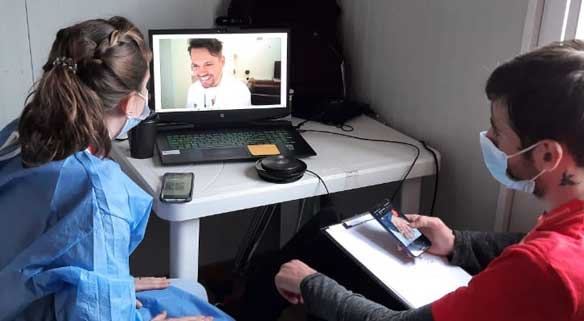
Our tele-health project is going strong at the Kara Tepe Camp in Lesvos. We have collaborated with the University Medical Center of Vienna to provide this service. There is a standing Friday conference with dermatologists from the University with providers in the camp. Radiology consultations have begun and Neurology will follow soon. The expert advice from medical specialists for the complex cases and follow up is so beneficial in providing care for the refugees.
We provided equipment for tele-health to our colleagues in Samos. They are doing mental health consultations via tele-health with French providers and report this project is really helping. Mental health is a huge need as they have experienced so much trauma as refugees. Sadly this trauma continues as they await asylum determinations.
Wheelchair Project
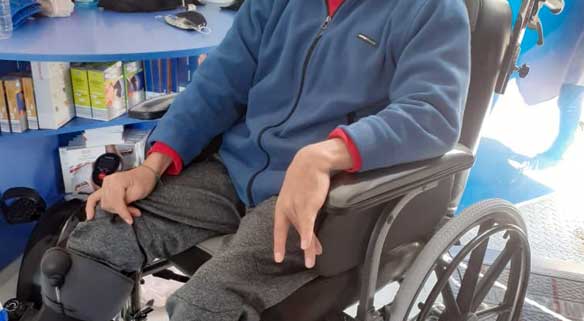
So many refugees have sustained injuries that have limited their mobility. Wheelchairs are always needed. Some are bought new and some are used. Many of the chairs get really “beat up” in the camp due to the rocks, gravel and deep holes throughout the camp.
Our friends at “LowTech” (an NGO) who generally do bicycle repairs are now repairing broken wheelchairs and teaching refugees to do it. They are putting on sturdier big tires to accommodate the rough terrain. Currently we are in need of purchasing more of these tires and an air pump that we want to install inside the camp.
Medical Follow Up
Medical follow up for medically fragile refugees is a critical ongoing project. Our medical team visits refugees in their tents to access their medical situation. In collaboration with many other NGO’s in the camp we try to provide needed services which include medical, mobility and safety equipment. While doing this we provide concerned human contact. We listen to their fears, concerns and needs.
The safety and basic needs of these medically fragile refugees are often complex, particularly in these difficult circumstances. A comprehensive approach to healthcare is very necessary. The need here is so great and will continue to be so. Donations to sustain this service are really needed.