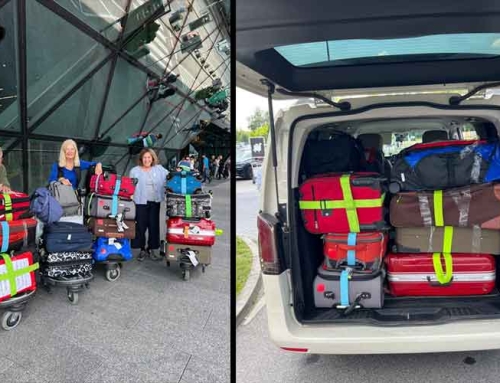

Our Ukrainian colleague Max met us in Kyiv, and together we began the long drive east to Kharkiv. Five hours on foggy winter roads, passing through multiple checkpoints. Some manned by soldiers scanning for weapons, others by military officials checking phones for digital IDs. Every Ukrainian carries their documents on their phone now, and somewhere, a master citizen list exists. If a man is not listed as exempt, student, caregiver, essential profession, he can be conscripted on the spot. By the time we reached Kharkiv, an air raid siren was going off. People barely glanced up from their phones. They check the apps, assess the threat, and carry on. We keep asking why no one rushes to shelter. Max simply says, “It ‘tis impossible to shelter every time, you cannot interrupt your life twenty times a day and survive the fear”.
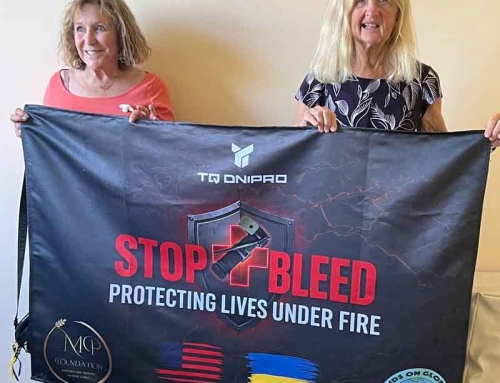
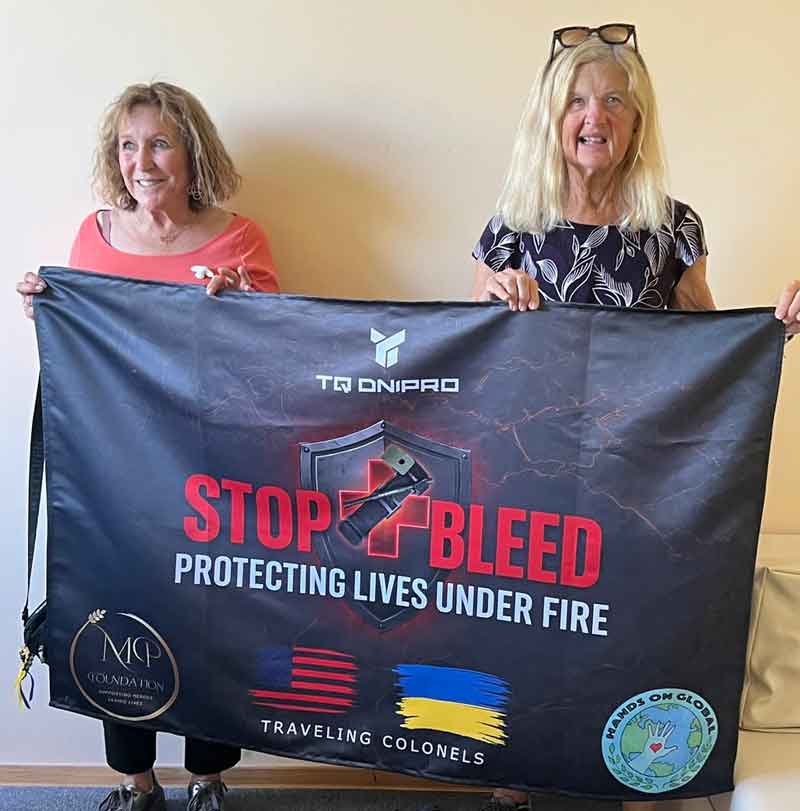
Our first stop was at an extraordinary Canadian NGO, HUG International. Hidden behind a gate in a residential area is a compound with happy compassionate volunteers. Their small courtyard is filled with rescued dogs, cats, animals abandoned or injured in the war. Inside, volunteers from all over the world are working on a multitude of projects in a very crowded warehouse. One team is hand-painting shoeboxes for 1,000 children, filled with toys, art supplies, and candy. Another team prepares deliveries of food and hygiene supplies to civilians trapped on the frontlines, people who, for so many reasons, cannot or will not leave homes that have become battlefields. HUG is deeply connected with Hands On Global. Their teams transport our tourniquets straight to civilian medics and frontline defenders. They reminded us again how lifesaving, how urgent, this equipment is.
Our next stop was a medical supply warehouse. Again, hidden from view, we enter through a non-descript door. I’m not sure who runs it, They supply emergency room medical equipment and trauma supplies to triage, stabilization units and to civilian ambulance medics. They accepted our tourniquets with such gratitude. They showed us a line of rejected ones, knock-offs, cheaply made, the type that fail under pressure. Here, a failing tourniquet can mean a failing life. This is why we spend the extra money on CAT certified ones. When someone is hemorrhaging, they get one chance. It cannot fail.
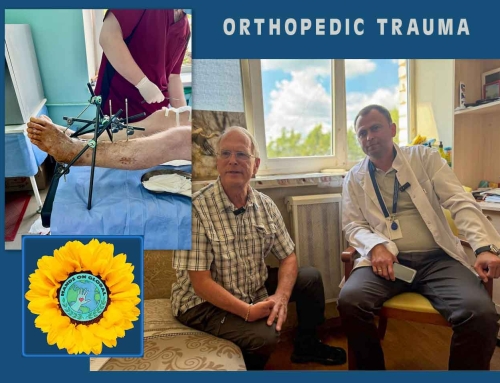
We then visited Dr. Palkin at the Kharkiv National Spine Hospital, where the spinal cages we delivered earlier have already been put to use. We walked through the wards, meeting patients recovering after complex surgeries. These stabilization systems are scarce here and desperately needed.
Eventually, we checked into a hotel somewhere in Kharkiv. Max had meetings all over the city and wanted to see his son, a 22-year old who will face conscription in six months. Most of his friends are already serving or have fled the country. There is a heaviness in the air that only parents of war-aged children can truly understand. I would never give my child to war!
That night I finally grasped why people ignore the air raid sirens. Ten alerts in one night. Impossible to sleep. Around midnight, one struck close. The lights flickered, the internet paused, Sonny heard a whistling and then an explosion. Later, we learned it hit a commercial complex. No details yet on casualties. Meanwhile, Kyiv endured over 500 drones and 37 missiles that night alone. And we thought Kharkiv was going to be more dangerous as it is only 60km from the Russian border, where missiles have a short distance to go. In the morning, we visited a hidden military supply depot, no sign, no markings, just a door in a non-descript building. The moment we entered, we were embraced, hugged, kissed, welcomed like family. They showed us their vests, their clothing, their emergency medical kits. Each kit is meant to save a life, but only barely. Supplies for one limb, one wound. They spoke quietly about needing tourniquets for multiple injuries. Many defenders have lost two or three limbs. It is unthinkable. Yet it is their reality. We drove back toward Kyiv in a thick winter fog. On the way, we stopped and were introduced to an amazing man, the Director of the National Institute of Human Rights. He has personally evacuated thousands of Ukrainian children to safety in other countries and continues to track each one, ensuring they will be returned home when the war ends. He joked about losing two cars while doing this.
Returned to Kyiv, Max headed off by train to Chernivtsi, and our team went to dinner, drinks, and then to bed, exhausted. Again, the air raids began. Three that night. I found myself devising my own “safe spot,” not the shelter, but the hallway, away from the windows and with two walls from the outer building. As I listened to the sirens across the city, I realized, that we too have normalized the sound of war. Maybe it is time to leave. Or maybe this is what it means to bear witness, to stay just long enough to understand how people here continue to live, to work, to hope, even as the sky threatens them every day.